Saturday, April 25, 2026

book: Runnin' Down a Dream by Bill Gurley

a very good book. sound advice, a bit heavy on sports stories

Amazon.com: Runnin' Down a Dream: How to Thrive in a Career You Actually 
Love (Audible Audio Edition): Bill Gurley, Bill Gurley, Random House Audio: Audible Books & Originals

Runnin’ Down a Dream identifies six principles to flourish in your chosen career: the antidotes to career regret. From developing “obsessive” curiosity to the art of building strong peer groups, these timeless principles add up to a playbook not just for success, but a purpose-filled life.


"Runnin' Down a Dream" is an idiom meaning
to actively pursue, chase, or work toward achieving a major personal goal or ambition. 

Popularized by Tom Petty’s 1989 song,
it signifies relentless dedication, embracing a "mystery" (uncertainty) of the journey,
and taking action to make dreams a reality. 

It implies a, passionate, driven pursuit of one's desires.

#69. Runnin’ Down a Dream: How to Thrive in a Career You Actually Love | by Alastair Allen | Mar, 2026 | Medium

Runnin' Down a Dream is a New York Times bestseller by venture capitalist Bill Gurley that provides a playbook for avoiding "career regret" by turning deep fascinations into thriving professional paths. Released in early 2026, the book distills a decade of research into six actionable principles for finding work that feels less like a burden and more like a purpose.
Core Framework: The Six Principles
Gurley argues that success is not just about effort but about a specific methodology of discovery and growth.
  • Chase Your Curiosity: Rather than just "following passion," Gurley advocates for finding fascination—the specific curiosity that drives you to work longer and deeper than competitors without burning out.
  • Hone Your Craft: High-level talent is often the result of years spent in a "high-metabolism" learning mode, treating one's career as a lifelong apprenticeship.
  • Develop Mentors: He suggests moving beyond single gurus to build a "personal board of advisers" using books, podcasts, and direct relationships.
  • Embrace Your Peers: Growth is accelerated by surrounding oneself with peers who are slightly better or equally obsessed, such as 
    MrBeast
    's early circle of creators.
  • Go Where the Action Is: He emphasizes the importance of geographic or digital hubs—moving to Silicon Valley for tech or Nashville for music—to increase the odds of preparation meeting luck.
  • Always Give Back: sustainable careers are built on generosity; teaching others helps cement your own reputation and mastery.


Runnin' Down a Dream | Summary, Audio, Quotes @sobrief

Key Takeaways

  • Find Your Fascination: Move beyond "passion" toward obsessive curiosity. Use trial and error to find what genuinely interests you and ignore what bores you.

  • Relentless Mastery: True experts never stop learning. This includes studying the history of your field, keeping up with new developments, and borrowing ideas from unrelated industries (far analogies).

  • The Power of Proximity: Geography matters. To accelerate your career, move to the industry’s epicenter (e.g., Silicon Valley for tech, L.A. for film) to increase your "serendipity" and networking opportunities.

  • Leverage Mentors & Peers: 

    • Peers: Treat others in your field as collaborators rather than competitors. Group learning (like MrBeast's "Daily Masterminds") can lead to exponential growth.

    • Mentors: Find people who have the life you want and study their path.

  • Adopt an Abundance Mindset: View your career as an "infinite game." Giving back through teaching or mentorship creates goodwill and a lasting legacy.

  • Resilience is Mandatory: Success requires starting at the bottom and enduring "boldness regrets." Gurley notes that it is never too late to pivot


Videos, Podcasts:

Bill Gurley - YouTube

Runnin' Down a Dream: How to Succeed and Thrive in a Career You Love - Bill Gurley 9/14/2018 - YouTube

"Life is use or lose proposition"


Anthropic's Hidden Money Network Will COLLAPSE Open AI Competition - Bill Gurley Exposes All! - YouTube @ Tom Bilyeu - YouTube


Most People Wait Too Long to Change Their Life - Bill Gurley - YouTube
Chris Williamson - YouTube

Bill Gurley — The AI Era, 10 Days in China, & Life Lessons from Bob Dylan, Jerry Seinfeld,, and More - YouTube @ Tim Ferriss

Legendary Investor Outlines His AI Thesis in 14 Minutes — Bill Gurley - YouTube  @ Tim Ferriss


All-In Summit: Bill Gurley presents 2,851 Miles - YouTube

and his "side quest" for good of society, revealing 


Saturday, April 18, 2026

Book: Meditations by Marcus Aurelius

Meditations - Wikipedia

Marcus Aurelius wrote the 12 books of the Meditations in Koine Greek[1] as a source for his own guidance and self-improvement


Philosopher's Notes | Marcus Aurelius

by Donald Robertson |Yale University Press©2024
Marcus Aurelius: The Stoic Emperor – Donald J. Robertson

Marcus Aurelius: The Stoic Emperor (Ancient Lives): Robertson, Donald J.: 9780300256666: Amazon.com: Books


Meditations by Marcus Aurelius | Summary, Audio, Quotes, FAQ
@SoBrief

Meditations receives high praise from most reviewers for its timeless wisdom and practical philosophy. Readers appreciate Marcus Aurelius' reflections on life, death, and human nature, finding them applicable to modern challenges. Many consider it a book to revisit regularly for guidance and perspective. Some note its repetitive nature and occasional difficulty in comprehension. Critics argue it may not resonate with everyone, but most agree on its enduring value as a classic work of Stoic philosophy, offering insights on virtue, duty, and living a meaningful life.


Books by Marcus Aurelius, Emperor of Rome - Project Gutenberg

Meditations by Emperor of Rome Marcus Aurelius | Project Gutenberg

Credits: J. Boulton and David Widger

gutenberg.org/cache/epub/2680/pg2680.txt

The Meditations of the Emperor Marcus Aurelius Antoninus by Marcus Aurelius | Project Gutenberg

Translator: George W. Chrystal

gutenberg.org/cache/epub/55317/pg55317.txt


The Internet Classics Archive | The Meditations by Marcus Aurelius @classics.mit.edu

Translated by George Long


Project Gutenberg offers several public domain translations of Marcus Aurelius’ Meditations, with the most notable being George Long’s 1862 translation (often formatted by J. Boulton and David Widger) and George W. Chrystal’s 1902 version. Long is recognized for accuracy but archaic language, while Chrystal is seen as more poetic and accessible, notes.
George Long Translation (1862) - Common on Gutenberg
  • Style: Victorian, faithful, and precise, but uses archaic English.
  • Accuracy: Considered a "standard" translation and highly reliable.
  • Gutenberg Contributors: Frequently produced or edited by J. Boulton and David Widger (e.g., eBook #2680).
  • Pros/Cons: It is very honest to the original Greek, but can feel stilted for modern readers seeking a smooth read.
George W. Chrystal Translation (1902) - Gutenberg/Foulis
  • Style: A revision of the 1742 Foulis translation, it is often praised as more "poetic," elegant, and easier to understand.
  • Suitability: Often marketed as a balance between classical dignity and modern readability.
  • Pros/Cons: It flows well but may be slightly less literal than Long's in certain passages.
Key Differences and Summary
  • Long vs. Chrystal: Long is better for scholars wanting a literal translation. Chrystal is better for beginners seeking readability.
  • Other Gutenberg Versions: Occasionally, Meric Casaubon’s 1634 translation is found, which is very archaic, or works produced by editors like J. Boulton who format and update older texts.
  • Comparison: Both are free, but users typically find Chrystal more accessible, while Long is a solid, direct translation.


Give me 13 minutes and I'll teach you how to deal with anyone (from the Stoics) - YouTube
by Daily Stoic - YouTube (Ryan Holiday)

This video explores Stoic strategies for managing difficult relationships and interactions. Here are the key takeaways and essential quotes:

Core Philosophy on Dealing with People

  • Collaboration is natural: Humans are designed to work together, like hands, feet, or rows of teeth. Obstructing one another or harboring hatred is contrary to our nature.
  • Anticipate frustration: Start your day by acknowledging that you will likely encounter individuals who are meddling, ungrateful, arrogant, dishonest, jealous, or surly. This is not pessimism; it is preparation to ensure their behavior does not compromise your own character.
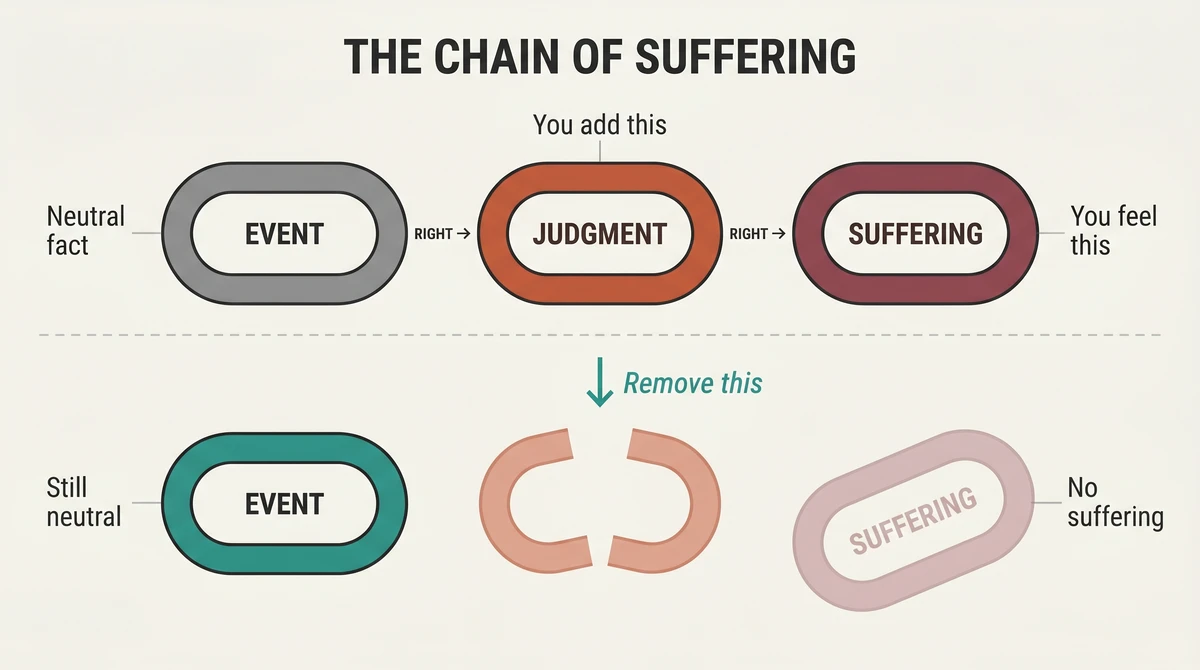
  • Focus on your response: You cannot control what others do, nor can you change them. You only have control over your own attitude, your opinions, and your actions in response to them.
  • Difficult people as opportunities: When someone is annoying or obnoxious, view them as a "strong sparring partner." These interactions are opportunities to practice virtues like patience, kindness, forgiveness, and self-discipline.

Key Quotes

  • On expectation: "When you wake in the morning, tell yourself the people I will deal with today will be meddling, ungrateful, arrogant, dishonest, jealous, and surly."
  • On truth and ignorance: "Against their will, their souls are cut off from truth." Recognizing that people often act wrongly because they lack understanding helps foster empathy rather than anger.
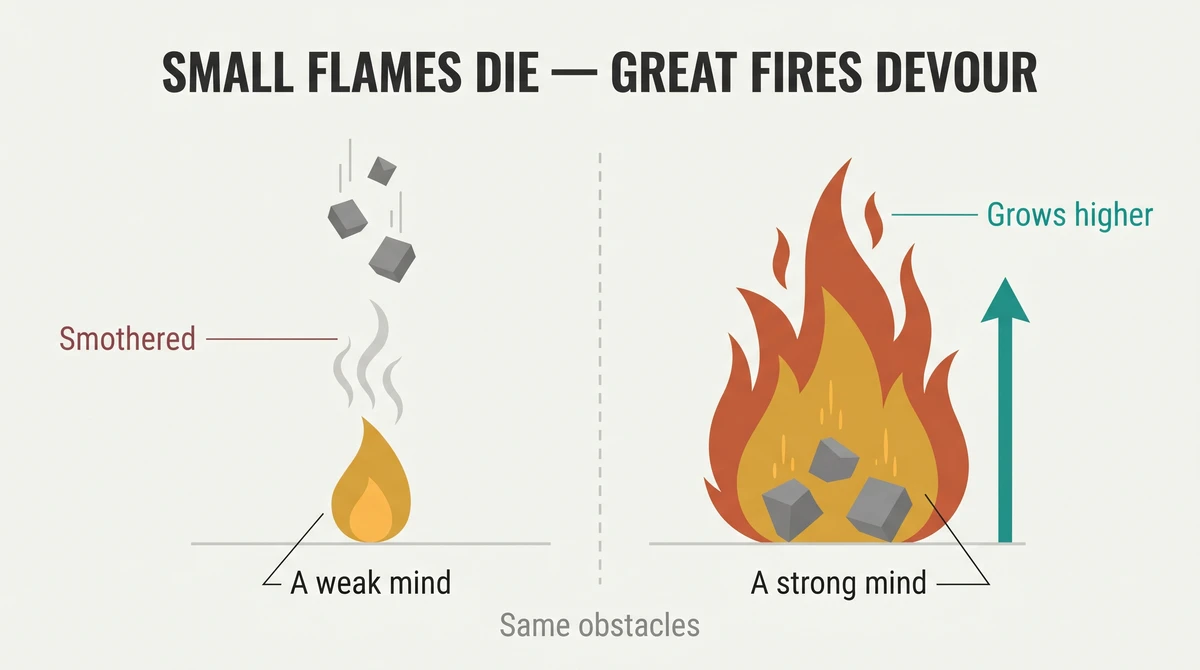
  • On the obstacle: "The obstacle is the way." Difficult people are not roadblocks to your success; they are the path through which you refine your character and develop excellence.
  • On the nature of conflict: "No one can implicate me in ugliness. Nor can I feel angry at my relative or hate him."
  • On kindness: "Goddamn it, you got to be kind." Despite the stern nature of Stoicism, kindness and grace are essential duties because everyone is flawed and broken.

Strategic Takeaways

  • Don't become the problem: The ultimate goal is to ensure that you do not let "shitty people" turn you into a "shitty person."
  • Statistical acceptance: Recognize that the existence of difficult people is a statistical certainty. Their behavior is simply an expression of who they are, and you are fortunate to remain unswayed by their influence.
  • Remove the ego: When you feel offended, realize you are complicit in that feeling. By deciding not to take offense, you regain your power and preserve your peace of mind.