Saturday, April 25, 2026

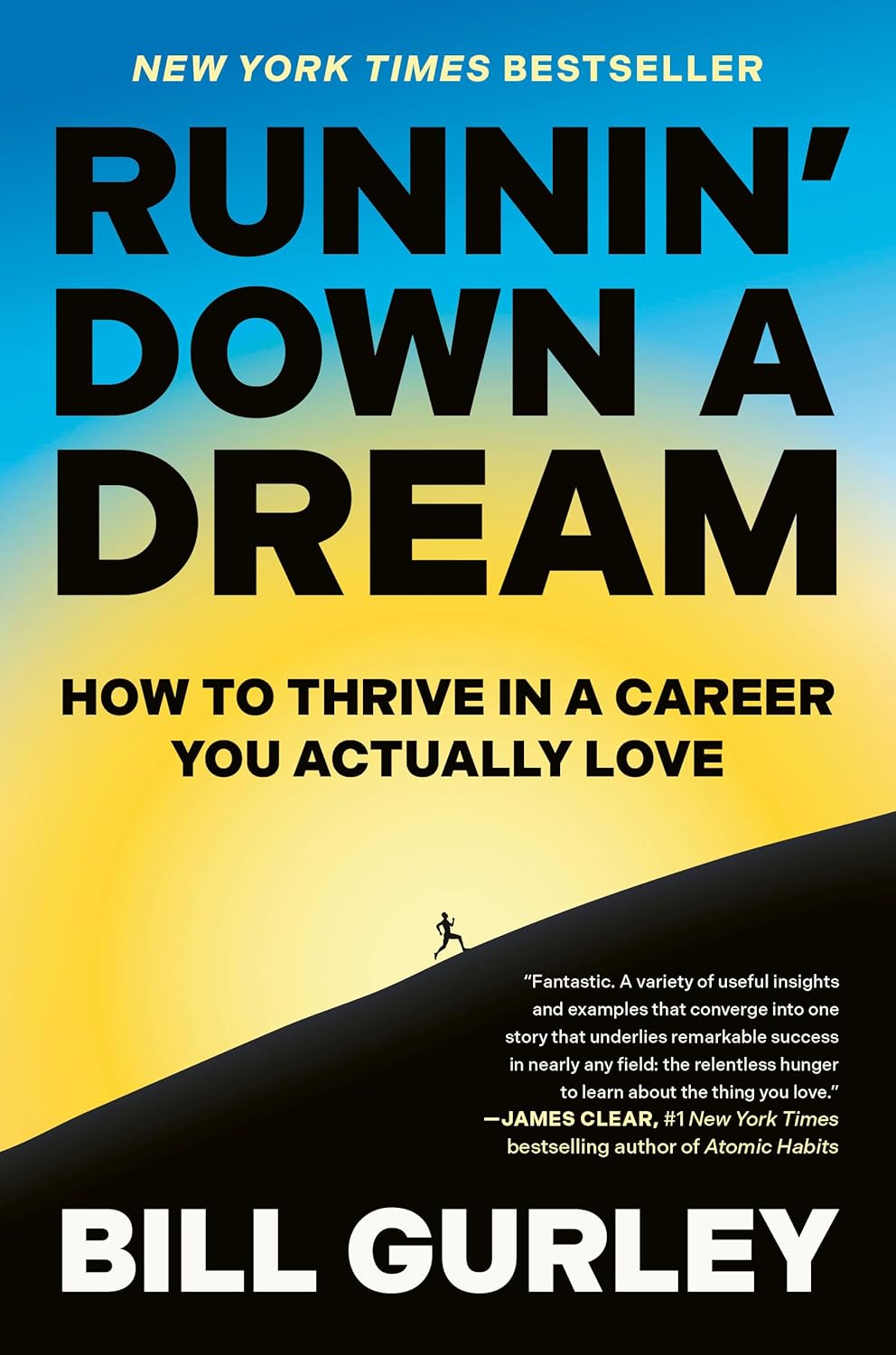
book: Runnin' Down a Dream by Bill Gurley

a very good book. sound advice, a bit heavy on sports stories

Amazon.com: Runnin' Down a Dream: How to Thrive in a Career You Actually 
Love (Audible Audio Edition): Bill Gurley, Bill Gurley, Random House Audio: Audible Books & Originals

Runnin’ Down a Dream identifies six principles to flourish in your chosen career: the antidotes to career regret. From developing “obsessive” curiosity to the art of building strong peer groups, these timeless principles add up to a playbook not just for success, but a purpose-filled life.


"Runnin' Down a Dream" is an idiom meaning
to actively pursue, chase, or work toward achieving a major personal goal or ambition. 

Popularized by Tom Petty’s 1989 song,
it signifies relentless dedication, embracing a "mystery" (uncertainty) of the journey,
and taking action to make dreams a reality. 

It implies a, passionate, driven pursuit of one's desires.

#69. Runnin’ Down a Dream: How to Thrive in a Career You Actually Love | by Alastair Allen | Mar, 2026 | Medium

Runnin' Down a Dream is a New York Times bestseller by venture capitalist Bill Gurley that provides a playbook for avoiding "career regret" by turning deep fascinations into thriving professional paths. Released in early 2026, the book distills a decade of research into six actionable principles for finding work that feels less like a burden and more like a purpose.
Core Framework: The Six Principles
Gurley argues that success is not just about effort but about a specific methodology of discovery and growth.
  • Chase Your Curiosity: Rather than just "following passion," Gurley advocates for finding fascination—the specific curiosity that drives you to work longer and deeper than competitors without burning out.
  • Hone Your Craft: High-level talent is often the result of years spent in a "high-metabolism" learning mode, treating one's career as a lifelong apprenticeship.
  • Develop Mentors: He suggests moving beyond single gurus to build a "personal board of advisers" using books, podcasts, and direct relationships.
  • Embrace Your Peers: Growth is accelerated by surrounding oneself with peers who are slightly better or equally obsessed, such as 
    MrBeast
    's early circle of creators.
  • Go Where the Action Is: He emphasizes the importance of geographic or digital hubs—moving to Silicon Valley for tech or Nashville for music—to increase the odds of preparation meeting luck.
  • Always Give Back: sustainable careers are built on generosity; teaching others helps cement your own reputation and mastery.


Runnin' Down a Dream | Summary, Audio, Quotes @sobrief

Key Takeaways

  • Find Your Fascination: Move beyond "passion" toward obsessive curiosity. Use trial and error to find what genuinely interests you and ignore what bores you.

  • Relentless Mastery: True experts never stop learning. This includes studying the history of your field, keeping up with new developments, and borrowing ideas from unrelated industries (far analogies).

  • The Power of Proximity: Geography matters. To accelerate your career, move to the industry’s epicenter (e.g., Silicon Valley for tech, L.A. for film) to increase your "serendipity" and networking opportunities.

  • Leverage Mentors & Peers: 

    • Peers: Treat others in your field as collaborators rather than competitors. Group learning (like MrBeast's "Daily Masterminds") can lead to exponential growth.

    • Mentors: Find people who have the life you want and study their path.

  • Adopt an Abundance Mindset: View your career as an "infinite game." Giving back through teaching or mentorship creates goodwill and a lasting legacy.

  • Resilience is Mandatory: Success requires starting at the bottom and enduring "boldness regrets." Gurley notes that it is never too late to pivot


Videos, Podcasts:

Bill Gurley - YouTube

Runnin' Down a Dream: How to Succeed and Thrive in a Career You Love - Bill Gurley 9/14/2018 - YouTube

"Life is use or lose proposition"


Anthropic's Hidden Money Network Will COLLAPSE Open AI Competition - Bill Gurley Exposes All! - YouTube @ Tom Bilyeu - YouTube


Most People Wait Too Long to Change Their Life - Bill Gurley - YouTube
Chris Williamson - YouTube

Bill Gurley — The AI Era, 10 Days in China, & Life Lessons from Bob Dylan, Jerry Seinfeld,, and More - YouTube @ Tim Ferriss

Legendary Investor Outlines His AI Thesis in 14 Minutes — Bill Gurley - YouTube  @ Tim Ferriss


All-In Summit: Bill Gurley presents 2,851 Miles - YouTube

and his "side quest" for good of society, revealing 


Saturday, April 18, 2026

Book: Meditations by Marcus Aurelius

Meditations - Wikipedia

Marcus Aurelius wrote the 12 books of the Meditations in Koine Greek[1] as a source for his own guidance and self-improvement


Philosopher's Notes | Marcus Aurelius

by Donald Robertson |Yale University Press©2024
Marcus Aurelius: The Stoic Emperor – Donald J. Robertson

Marcus Aurelius: The Stoic Emperor (Ancient Lives): Robertson, Donald J.: 9780300256666: Amazon.com: Books


Meditations by Marcus Aurelius | Summary, Audio, Quotes, FAQ
@SoBrief

Meditations receives high praise from most reviewers for its timeless wisdom and practical philosophy. Readers appreciate Marcus Aurelius' reflections on life, death, and human nature, finding them applicable to modern challenges. Many consider it a book to revisit regularly for guidance and perspective. Some note its repetitive nature and occasional difficulty in comprehension. Critics argue it may not resonate with everyone, but most agree on its enduring value as a classic work of Stoic philosophy, offering insights on virtue, duty, and living a meaningful life.


Books by Marcus Aurelius, Emperor of Rome - Project Gutenberg

Meditations by Emperor of Rome Marcus Aurelius | Project Gutenberg

Credits: J. Boulton and David Widger

gutenberg.org/cache/epub/2680/pg2680.txt

The Meditations of the Emperor Marcus Aurelius Antoninus by Marcus Aurelius | Project Gutenberg

Translator: George W. Chrystal

gutenberg.org/cache/epub/55317/pg55317.txt


The Internet Classics Archive | The Meditations by Marcus Aurelius @classics.mit.edu

Translated by George Long


Project Gutenberg offers several public domain translations of Marcus Aurelius’ Meditations, with the most notable being George Long’s 1862 translation (often formatted by J. Boulton and David Widger) and George W. Chrystal’s 1902 version. Long is recognized for accuracy but archaic language, while Chrystal is seen as more poetic and accessible, notes.
George Long Translation (1862) - Common on Gutenberg
  • Style: Victorian, faithful, and precise, but uses archaic English.
  • Accuracy: Considered a "standard" translation and highly reliable.
  • Gutenberg Contributors: Frequently produced or edited by J. Boulton and David Widger (e.g., eBook #2680).
  • Pros/Cons: It is very honest to the original Greek, but can feel stilted for modern readers seeking a smooth read.
George W. Chrystal Translation (1902) - Gutenberg/Foulis
  • Style: A revision of the 1742 Foulis translation, it is often praised as more "poetic," elegant, and easier to understand.
  • Suitability: Often marketed as a balance between classical dignity and modern readability.
  • Pros/Cons: It flows well but may be slightly less literal than Long's in certain passages.
Key Differences and Summary
  • Long vs. Chrystal: Long is better for scholars wanting a literal translation. Chrystal is better for beginners seeking readability.
  • Other Gutenberg Versions: Occasionally, Meric Casaubon’s 1634 translation is found, which is very archaic, or works produced by editors like J. Boulton who format and update older texts.
  • Comparison: Both are free, but users typically find Chrystal more accessible, while Long is a solid, direct translation.


Give me 13 minutes and I'll teach you how to deal with anyone (from the Stoics) - YouTube
by Daily Stoic - YouTube (Ryan Holiday)

This video explores Stoic strategies for managing difficult relationships and interactions. Here are the key takeaways and essential quotes:

Core Philosophy on Dealing with People

  • Collaboration is natural: Humans are designed to work together, like hands, feet, or rows of teeth. Obstructing one another or harboring hatred is contrary to our nature.
  • Anticipate frustration: Start your day by acknowledging that you will likely encounter individuals who are meddling, ungrateful, arrogant, dishonest, jealous, or surly. This is not pessimism; it is preparation to ensure their behavior does not compromise your own character.
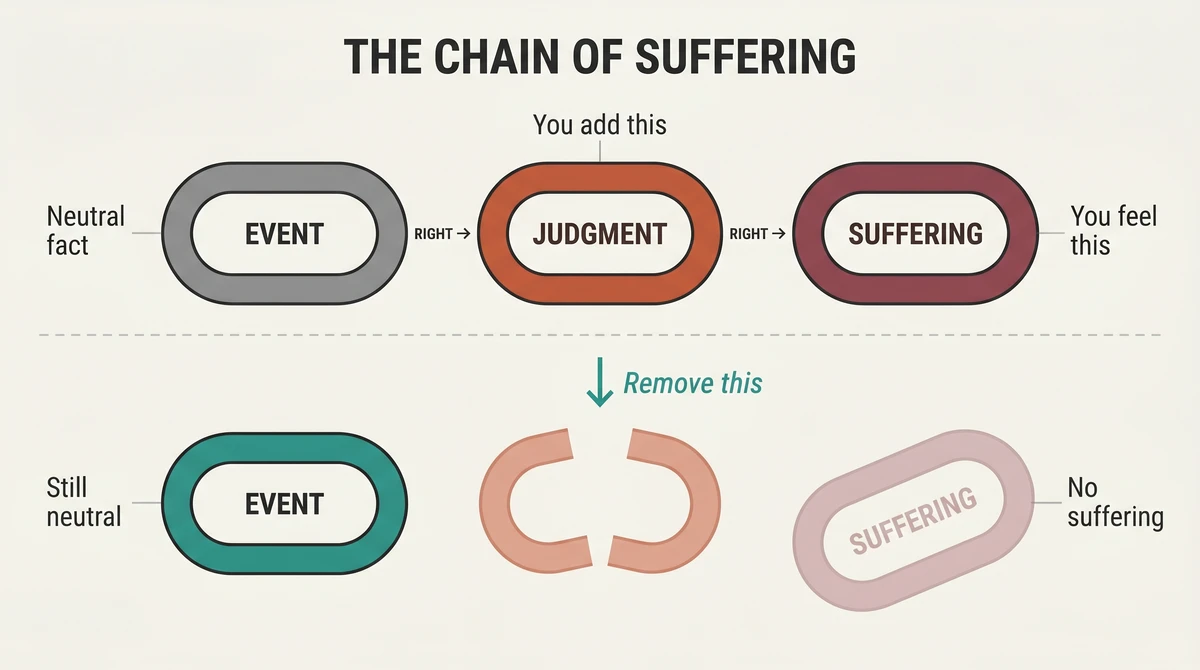
  • Focus on your response: You cannot control what others do, nor can you change them. You only have control over your own attitude, your opinions, and your actions in response to them.
  • Difficult people as opportunities: When someone is annoying or obnoxious, view them as a "strong sparring partner." These interactions are opportunities to practice virtues like patience, kindness, forgiveness, and self-discipline.

Key Quotes

  • On expectation: "When you wake in the morning, tell yourself the people I will deal with today will be meddling, ungrateful, arrogant, dishonest, jealous, and surly."
  • On truth and ignorance: "Against their will, their souls are cut off from truth." Recognizing that people often act wrongly because they lack understanding helps foster empathy rather than anger.
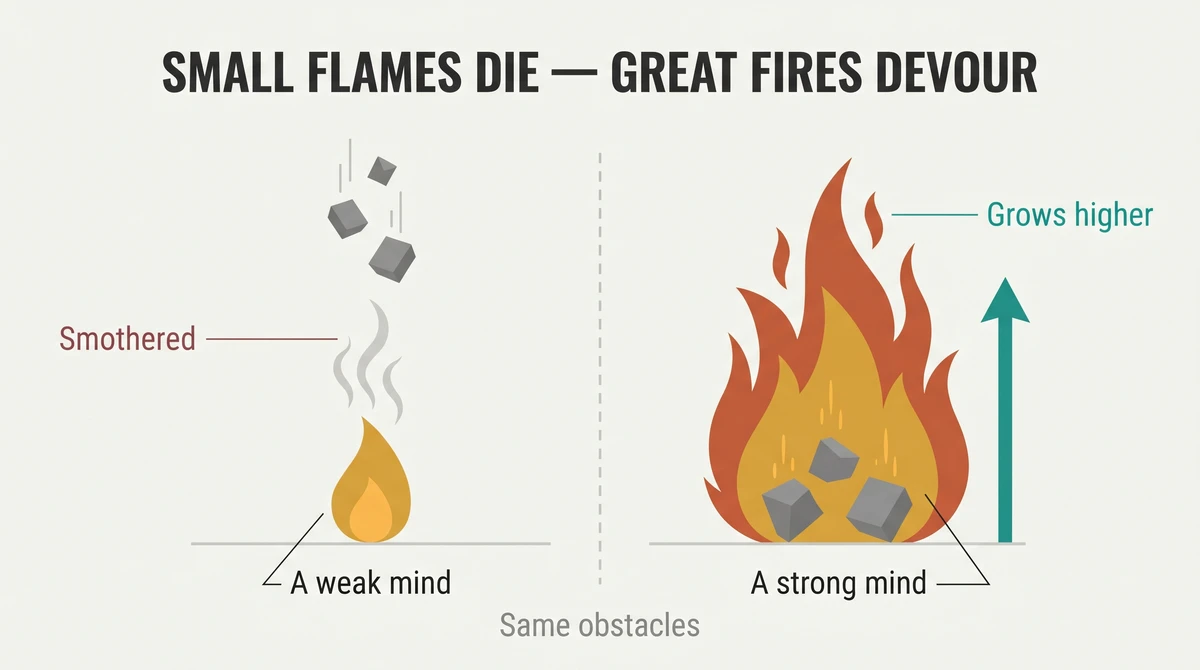
  • On the obstacle: "The obstacle is the way." Difficult people are not roadblocks to your success; they are the path through which you refine your character and develop excellence.
  • On the nature of conflict: "No one can implicate me in ugliness. Nor can I feel angry at my relative or hate him."
  • On kindness: "Goddamn it, you got to be kind." Despite the stern nature of Stoicism, kindness and grace are essential duties because everyone is flawed and broken.

Strategic Takeaways

  • Don't become the problem: The ultimate goal is to ensure that you do not let "shitty people" turn you into a "shitty person."
  • Statistical acceptance: Recognize that the existence of difficult people is a statistical certainty. Their behavior is simply an expression of who they are, and you are fortunate to remain unswayed by their influence.
  • Remove the ego: When you feel offended, realize you are complicit in that feeling. By deciding not to take offense, you regain your power and preserve your peace of mind.


Saturday, March 28, 2026

Gratitude by Jim Rohn, Jim Kwik, Andrew Huberman

Amazon.com: The Ultimate Jim Rohn Library (Audible Audio Edition): Jim Rohn, Jim Rohn, Nightingale-Conant: Audible Books & Originals

Begin With Gratitude and Watch the Miracles Flow Your Way | Articles | Jim Rohn

5 Simple, Practical Ways to Become More Grateful | Articles | Jim Rohn

  • Time: Schedule daily moments of silence to slow down and reflect.

  • Thought: Identify one or two things you typically take for granted and give thanks for them.

  • Generosity: Serve those with less to shift your focus from envy to contentment.

  • Ask: Ask friends what they are thankful for to discover new perspectives and bond.

  • Acknowledge: Write notes to loved ones expressing exactly why you value their presence.

"Learn to be thankful for what you already have, while you pursue all that you want."

— Jim Rohn


GRATITUDE IS THE KEY - Jim Rohn Motivation | Motivational Video - YouTube

Jim Rohn outlines seven essential principles to overcome adversity and transform your life:

  • Personal Responsibility: Stop seeking external rescue. Own your life, shift from a victim mindset, and become the author of your own story.
  • Mastering Emotions: Do not let fear, anger, or sadness control your future. Use your emotions as a guide to help you respond constructively to challenges.
  • Power of Small Actions: Breakthroughs are the result of consistent, daily progress. Focus on taking one small step at a time to build momentum.
  • Influence of Associations: Surround yourself with positive, driven people who inspire growth rather than those who validate your complaints.
  • Value of Learning: In difficult times, continue investing in your mind. New ideas create new perspectives and reveal opportunities where you once saw obstacles.
  • Gift of Gratitude: Regularly acknowledge what you have. This shifts your focus from scarcity to abundance and attracts more positive outcomes.
  • Faith in the Process: Success follows seasons of sowing and reaping. Trust that your persistent, hard work will eventually produce a harvest, even when progress is not immediately visible.

Key Quotes:

  • "The moment when all hope seems lost isn't the end of your story; it's actually the beginning of your transformation."
  • "Success leaves clues."
  • "Hope is not something you find; it's something you create."


How Gratitude Changes Your Brain 🧠 - YouTube by Jim Kwik

Key Points on the Science of Gratitude:

  • Brain Chemistry: Practicing gratitude releases dopamine (the motivation molecule) and serotonin, which are crucial neurotransmitters that enhance your mood and provide feelings of satisfaction and pleasure.
  • Molecular Structure: Consciously expressing gratitude can actually change the molecular structure of your brain, activating reward pathways and the hypothalamus.
  • Cognitive Function: It aids in decision-making and productivity by activating the prefrontal cortex, which governs rational thought and critical thinking.
  • Emotional Resilience: Gratitude impacts the limbic system, helping to regulate emotions, reduce toxic stress and anxiety, and promote self-love and empathy.
  • Physical Benefits: Research suggests it is linked to better sleep, improved immunity (counteracting the effects of stress and fear), and even the mitigation of chronic pain.
  • The Power of Perspective: By training your brain to focus on what you have rather than what you lack, you harness the power of your reticular activating system to highlight the positive, thereby reducing social comparison and digital depression.

Key Quotes and Wisdom:

  • "What you appreciate, appreciates. It grows."
  • "You do not have to wait for a greater life to feel grateful.
    You start feeling grateful and you'll have a greater life."
  • "Peace of mind is high currency right now."
  • "A little bit becomes a lot."
  • "Gratitude that's not expressed doesn't really exist."
  • "Your story is your superpower."

The 'THANKS' Practice Framework:

  • T (Time): Schedule it into your daily routine; if you don't schedule it, it likely won't happen.
  • H (Highlight): Review your day and highlight three positive moments to build episodic memory and optimism.
  • A (Acknowledge): Express thanks to others; it strengthens relationships and makes the recipient feel seen and valued.
  • N (Nature): Spend time in nature to reset your perspective and foster appreciation for life.
  • K (Kindness): Perform daily acts of kindness; kindness and gratitude are deeply interconnected.
  • S (Savor): Step back from your experiences to truly appreciate the small joys and victories of every day.

The Science of Gratitude & How to Build a Gratitude Practice | Huberman Lab Essentials - YouTube

Effective gratitude isn't just listing things you're thankful for; it's a pro-social practice that shifts your neurochemistry and physiology.

  • The Narrative Power: Because the brain is hardwired for stories, focus on a meaningful narrative—either one where you received genuine, wholehearted thanks, or one where you observed someone else being helped.
  • Genuine Intent: You cannot fake gratitude; the sincerity of the interaction is what activates the anterior cingulate and medial prefrontal cortex.
  • Physiological Benefits: A consistent 1–5 minute practice can lower systemic inflammation, reduce amygdala-based anxiety, and boost motivation by improving brain-heart connectivity.
  • The Protocol: Simply pick a compelling story, note a few bullet points to anchor your memory, and spend a few minutes reflecting on that experience to trigger a reliable, positive physiological state.


Friday, March 13, 2026

book: The Innovators by Walter Isaacson

The Innovators (book) - Wikipedia

The Innovators: How a Group of Hackers, Geniuses, and Geeks Created the Digital Revolution is an overview of the history of computer science and the Digital Revolution. It was written by Walter Isaacson, and published in 2014


The Innovators: How a Group of Hackers, Geniuses, and Geeks Created the Digital Revolution: Isaacson, Walter: 9781476708706: Amazon.com: Books


 The Innovators by Walter Isaacson | Summary, Audio, Quotes, FAQ @sobrief

AI summary

1. Collaborative Revolution

The digital age was not built by "lone geniuses" but through collaborative creativity. Breakthroughs emerged from diverse teams in research labs, academic institutions, and government projects like ARPANET.

2. Ada Lovelace’s Vision

Ada Lovelace was the first to see computers as more than just calculators. She envisioned machines as creative partners capable of manipulating symbols to create music and art, laying the groundwork for general-purpose computing.

3. Birth of the Computer

Modern computing was born from the convergence of several technologies in the late 1930s, including digital systems, binary logic, and electronic switches. Machines like ENIAC and EDVAC marked the transition from mechanical parts to stored programs.

4. Evolution of Programming

Programming moved from a niche technical task to a fundamental art form. Key milestones included Grace Hopper’s first compiler and the development of high-level languages like COBOL, which eventually democratized software development.

5. The Transistor Impact

Invented at Bell Labs in 1947, the transistor replaced bulky vacuum tubes. It acted as the "steam engine" of the digital age, enabling the miniaturization and increased reliability of all electronic devices.

6. The Microchip Era

The integrated circuit allowed multiple transistors to fit on a single silicon chip. This spurred the growth of Silicon Valley and led to the creation of the microprocessor, which powered the personal computer revolution.

7. Connecting the World

The Internet grew from a military-funded project (ARPANET) into a global network. Its success was built on decentralized architecture, open standards, and the foundational TCP/IP protocols.

8. Personal Computing

The PC revolution transformed computers from tools of institutional control into symbols of individual expression. Pioneers like Steve Jobs and Bill Gates brought technology into homes, forever changing how we work and communicate.

Saturday, March 7, 2026

quotes: Jim Rohn

Jim Rohn’s timeless wisdom emphasizes personal responsibility, daily discipline, and continuous self-improvement to build a successful life. Key insights include focusing on becoming better rather than wishing for easier circumstances, using self-education to build a fortune, and cultivating habits that lead to success.

Here are 10 of the best, brief quotes from Jim Rohn:
  • "Don't wish it were easier,
    wish you were better."

  • "Your life does not get better by chance,
    it gets better by change."

  • "Formal education will make you a living;
    self-education will make you a fortune."

  • "Either you run the day
    or the day runs you."


  • "Discipline is the bridge between goals and accomplishment."

  • "We must all suffer one of two things:
    the pain of discipline or
    the pain of regret or disappointment."

  • "You are the average of the five people you spend the most time with."

  • "The major value in life is not what you get.
    The major value in life is what you become."

  • "If you don't like how things are, change it!
    You're not a tree."

  • "Success is the natural consequence
    of consistently applying basic fundamentals."