Saturday, April 22, 2017

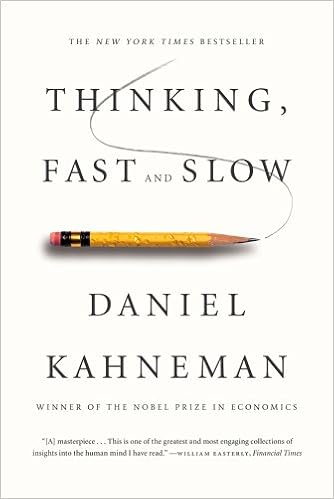
Daniel Kahneman: Thinking Fast and Slow


Thinking, Fast and Slow: Daniel Kahneman: 9780374533557: Amazon.com: Books

Woodrow Wilson School - Daniel Kahneman

Daniel Kahneman: Thinking Fast and Slow - The Long Now

Daniel Kahneman: "Thinking, Fast and Slow" | Talks at Google - YouTube

TED talk: The riddle of experience vs. memory | Daniel Kahneman - YouTube

THINKING, FAST AND SLOW BY DANIEL KAHNEMAN | ANIMATED BOOK REVIEW - YouTube


Thinking, Fast and Slow — By Daniel Kahneman — Book Review - The New York Times

Thinking, Fast and Slow - Wikipedia

Review of Thinking, Fast and Slow by Daniel Kahneman – Association for Psychological Science

Book Review: Thinking, Fast and Slow by Daniel Kahneman - Bloomberg

Quote by Daniel Kahneman:
“Nothing in life is as important as you think it is, while you are thinking about it”
Image result for nothing in life is as important as you think it is while you are thinking about it

mentioned in:
Week 2: Getting Deeper into Happy Learning - 2-7 Bad Grades and Barb's Hands – The Value of Mental Tricks - McMaster University | Coursera

Motivation vs Procrastination

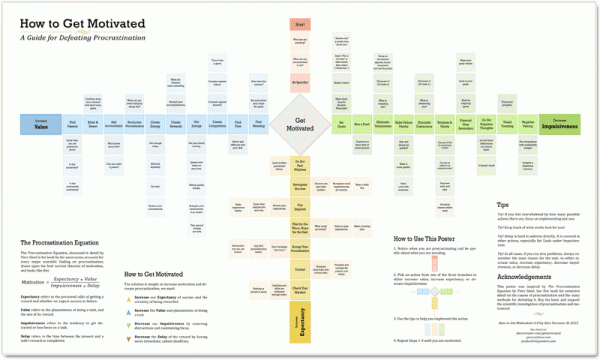
How to Get Motivated: A Guide for Defeating Procrastination

Post image for How to Get Motivated: A Guide for Defeating Procrastination

mentioned in "Mindshift" MOOC
2-5 Getting Past Procrastination - McMaster University | Coursera

The Procrastination Equation Book Cover
Motivation = ENERGY x (Value x Expectancy / Impulsivity x Delay) | OPTIMIZE (by Brian Johnson)

The Procrastination Equation by Piers Steel | PhilosophersNotes - OPTIMIZE with Brian Johnson

Motivation = ENERGY * ( Expectancy * Value ) / ( Impulsiveness * Delay )

Expectancy = confidence that you can do it; 
if not, simplify the goal 

Value = our desire

review:

Tuesday, April 11, 2017

Mastery learning

Mastery learning - Wikipedia

"Mastery learning (or, as it was initially called, "learning for mastery") is an instructional strategy and educational philosophy, first formally proposed by Benjamin Bloom in 1968. Mastery learning maintains that students must achieve a level of mastery (e.g., 90% on a knowledge test) in prerequisite knowledge before moving forward to learn subsequent information. If a student does not achieve mastery on the test, they are given additional support in learning and reviewing the information and then tested again. This cycle continues until the learner accomplishes mastery, and they may then move on to the next stage."

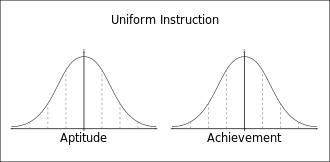
Comparison between normal curve for aptitude and normal curve for achievement after learning

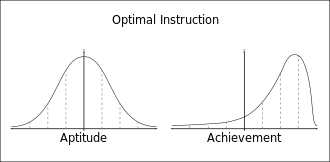
Comparison between normal curve for aptitude and normal curve for achievement after optimal learning

Thursday, March 23, 2017

technique: The Memory Palace

RANDOM MEMORY TIPS // #002 - YouTube


Method of loci - Wikipedia

"The method of loci (loci being Latin for "places") is a method of memory enhancement which uses visualizations with the use of spatial memory, familiar information about one's environment, to quickly and efficiently recall information. The method of loci is also known as the memory journey, memory palace, or mind palace technique."

Saturday, February 18, 2017

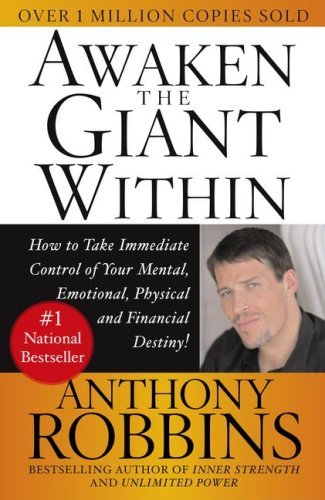
book: Awaken the Giant Within by Tony Robbins

Amazon.com: Awaken the Giant Within : How to Take Immediate Control of Your Mental, Emotional, Physical and Financial Destiny! (Paperback): Anthony Robbins: Everything Else

Book Summary: Awaken The Giant Within by Anthony Robbins
  • “Any time you sincerely want to make a change, the first thing you must do is to raise your standards and believe you can meet them”.
  • “We must change our belief system and develop a sense of certainty that we can and will meet the new standards before we actually do”.
  • “It’s not what we do once in a while that shapes our lives, but what we do consistently”.
“The three decisions that control your destiny are:
  1. what to focus on. 
  2. what things mean to you. 
  3. what to do to create the results you desire”.
“Everything you and I do, we do either out of our
  • need to avoid pain or
  • our desire to gain pleasure”.
“It’s not the events of our lives that shape us,
but our beliefs as to what those events mean”.