Saturday, October 8, 2022

Jim Rohn

A major influencer behind many of today's business and personal coaches. 
Simple and effective life advices.

Jim Rohn - Wikipedia


Jim Rohn - Best Motivational Speech. Use Your Own Mind, Think, & Make Good Decisions! - YouTube
"take advice but not orders"

How to Work on Yourself | Jim Rohn Personal Development - YouTube


Jim Rohn Personal Development - See Things That Don't Exist (Law Of Attraction) - YouTube

Jim Rohn ~ How to Work Smarter Time Management - YouTube

Jim Rohn - Learn These Skills or Live a Mediocre Life - YouTube

"seasons of life"

How some people earn much more than others in same time?
There is no extra time in life; created value makes difference in results;
You can't get more time, but you can create more value.
We primarily get paid for value we bring to marketplace.

It is possible to crate more value if you work primarily on yourself.
To get above average income become above average person.
Frustration: looking for above average pay and job before becoming above average person.
Learn to work harder on yourself than you do on your job.
For things to change for you, you have to change first.

Opportunity is mixed with difficulty: that will never change.
Your life will change when you change.
The only way it gets better for you when you get better. 

Some people don't do well because they major in minor things. 
Life an business is like changing seasons. You can not change the seasons, but you can change yourself. Life gets better not by chance but by change.

4 major lessons of life:

1. learn how to handle "winters" (difficulties, recessions, downtimes...)
You can not change January by changing calendar, but you can get stronger, wiser, better
Don't wish it was easier, wish you are better; don't wish for less problems, wish for more skills;
don't wish for less challenge, wish for more wisdom

2. learn how to take advantage of "spring" (opportunity)
"spring" always follows "winter"; days always follow nights; opportunity follows difficulty
Take advantage of spring, you have to do something with it!
You have one of 2 things in life: "plant in the spring or beg in the fall"
Take advantage of spring quickly, only a handful are handed to us, they don't come forever.

3. learn how to protect crops all "summer" 
You have to take care of what you start
The soon you plant in spring, the bugs will come to take it; they will take it unless you prevent it.
You have to learn how to protect what good you start, it is one of the challenges.
a) all good will be attacked, not to think so is naive
b) all values must be defended

4. learn how to reap in the "fall" without complaint and apology (harvest time)
take full responsibility to what happens to you
it is the day when you pass from childhood to adulthood to accept full responsibility
no value in "explaining" and "blaming" for bad results

It is not what happens that determines quality of your life, it happens to everybody.
It is what you DO that changes everything.


Internet Archive Search: JIM rohn

7 Strategies Of Wealth And Hapiness By Jim Rohn : Free Download, Borrow, and Streaming : Internet Archive


Saturday, October 1, 2022

book: Courageous Dreaming by Alberto Villoldo

Courageous Dreaming: How Shamans Dream the World into Being - Kindle edition by Villoldo, Alberto. Religion & Spirituality Kindle eBooks @ Amazon.com.

from author of Shaman, Healer, Sage by Alberto Villoldo

"Modern physics tells us that we’re dreaming the world into being with every thought. Courageous Dreaming tells us how to dream our world with power and grace. The ancient shamans of the Americas understood that we’re not only creating our experience of the world, but are dreaming up the very nature of reality itself—that is, "life is but a dream." When you don’t dream your life, you have to settle for the nightmare being dreamed by others.

This book shows how to wake up from the collective nightmare and begin to dream a life of courage and grace, a sacred dream that shamans throughout time have known and served. Alberto Villoldo reveals ancient wisdom teachings that explain how to birth reality from the invisible matrix of creation; and reveals how we can interact with this matrix to dream a life of peace, health, and abundance. He shows us that courage is all that is required to create the joy we desire!"


another good distillation on theme of Hero's journey


summaries & reviews:

and a very good book summary by Brian Johnson

PNTV: Courageous Dreaming by Alberto Villoldo (#193) - YouTube

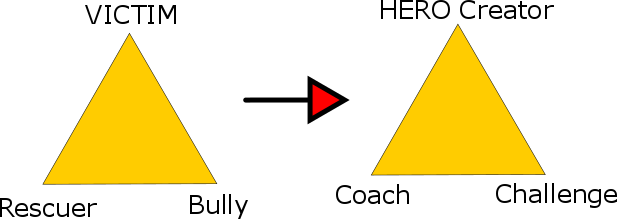
  • Victim => Hero
  • Brain "creates" reality: no difference of memory and dreams
  • No perfection: there are no perfect people, you will not be the first
  • Awesome x3: journaling every day about 3 moments 
  • Ready to die?
Typical fairytale turn nightmare dis-empowering story:
Victim faces Bully and needs a Rescuer

Turn this to into an empowering "hero's story":
Creator (Hero) faces Challenge with help of a Coach


Hero's question: "what do I really want?" then "create it"; challenges make me stronger


we are all living within our own stories, that they can either stay stuck in the past and put on repeat, or we can rewrite them and courageously imagine or dream a better version of ourselves and of our future.


related books:


book: The Wisdom Wheel by Alberto Villoldo

 The Wisdom Wheel: A Mythic Journey through the Four Directions - Kindle edition by Villoldo, Alberto. Religion & Spirituality Kindle eBooks @ Amazon.com.


Home - The Four Winds


"The Wisdom Wheel" Alberto Villoldo, PhD - YouTube


How the Shamanic Medicine Wheel Works - Jesse.TV

  • South – Serpent: Shed your identities and find a new perspective
  • West – Jaguar: Face the emotions you’ve been suppressing
  • North – Hummingbird: Enjoy the sweetness of the present moment
  • East – Eagle/Condor: Soar above and see a new vision for your life 


Jan 2012 Newsletter :: Drake Innerprizes | MyNewsletterBuilder


Saturday, September 24, 2022

book: On Writing Well by William Zinsser

 On Writing Well: The Classic Guide to Writing Nonfiction: Zinsser, William: 9780060891541: Amazon.com: Books

"Whether you want to write about people or places, science and technology, business, sports, the arts or about yourself in the increasingly popular memoir genre, On Writing Well offers you fundamental priciples as well as the insights of a distinguished writer and teacher. With more than a million copies sold, this volume has stood the test of time and remains a valuable resource for writers and would-be writers."

William Zinsser - Wikipedia

William Knowlton Zinsser was an American writer, editor, literary critic, and teacher. He began his career as a journalist for the New York Herald Tribune, where he worked as a feature writer, drama editor, film critic and editorial writer. He was a longtime contributor to leading magazines.

online:

Internet Archive Search: creator:"William Zinsser"

On Writing Well : William Zinsser : Free Download, Borrow, and Streaming : Internet Archive
On Writing Well, The Classic Guide to Writing Nonfiction, 6e (2001) @Archive.org


reviews and summaries:


ON WRITING WELL by William Zinsser | Core Message - YouTube

More productive knowledge, in less time. Productivity Game

“Few people realize how badly they write. Nobody has shown them how much excess or murkiness has crept into their style and how it obstructs what they are trying to say.” – William Zinsser

Selective

“Every successful piece of nonfiction should leave the reader with one provocative thought that he or she didn’t have before. Not two thoughts, or five—just one.”

Confident

Rewriting is the essence of writing ‐ professional writers rewrite their sentences over and over and then rewrite what they have rewritten...Rewriting makes writing tighter, stronger and more precise.

Refined

Your second draft will be much leaner than the first, but not lean enough. Refine your second draft by reading it from the perspective of an impatient reader who hates unnecessary words.   Get the impatient reader through your piece quickly by removing redundant words and replacing pretentious words.

Tantalizing

“The most important sentence in any article is the first one. If it doesn’t induce the reader to proceed to the second sentence, your article is dead. And if the second sentence doesn’t induce him to continue to the third sentence, it’s equally dead.”


On Writing Well Summary and Review - Four Minute Books

On Writing Well is your guide to becoming a great non-fiction writer that explains why you must learn and practice principles like simplicity, consistency, voice, editing, and enthusiasm if you want to persuade readers and make a difference in their lives.


"learn and practice principles like simplicity, consistency, voice, editing, and enthusiasm
if you want to persuade readers and make a difference in their lives."

Lesson 1: Cut out unnecessary words and phrases as much as possible because simple writing is the best at conveying meaning.

complex writing is bad writing.

Lesson 2: Your beginnings and endings make a big difference for reader engagement, so spend time making them great.

Lesson 3: Inspire yourself with your writing and you will inspire those who read it.


Saturday, September 17, 2022

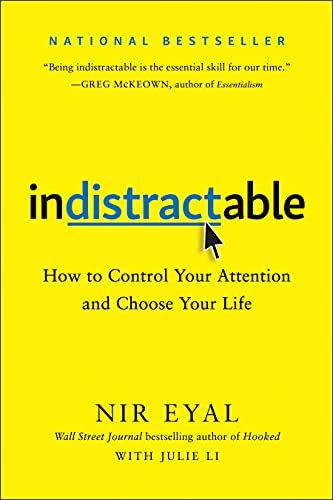
books: Indistractable & Hooked, by Nir Eyal


and previous book from the same author


excellent interview with book author:


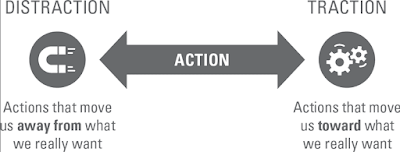
the solution and opposite for "dis-traction" (unplanned action) is "traction" (planned action)!

"time management" is "pain (discomfort) management"

"in-distract-able" is the superpower to have!


Nir Eyal Official Site: Articles, Videos, and Newsletter

NIR EYAL - INDISTRACTABLE: How To Control Your Attention And Choose Your Life -Part1/2 | London Real - YouTube

What makes some technology so habit-forming? | Nir Eyal | TED Institute - YouTube


online book on archive.org

Indistractable : NIR EYAL : Free Download, Borrow, and Streaming : Internet Archive


Nir Eyal - Wikipedia

"Nir Eyal is an Israeli-born American author, lecturer and investor known for his bestselling book, Hooked: How to Build Habit-Forming Products

After graduating from the Master of Business Administration program at Stanford in 2008,[6] Eyal and fellow students founded a company that placed online ads in Facebook, with Eyal serving as CEO.[4] His work in the company sparked his interest in the psychology of users, and he went on to become a consultant in product design.[4] In 2012, he taught a course in the program on product design at the Stanford University School of Engineering."


summaries: 


INDISTRACTABLE by Nir Eyal | Core Message - YouTube
HOOKED by Nir Eyal | Core Message - YouTube
by Productivity Game


Indistractable: Chapter Takeaways 


INTRODUCTION 

Chapter 1: Living the life you want requires not only doing the right things
but also avoiding doing the wrong things.

Chapter 2: Traction moves you toward what you really want while distraction moves you further away. Being indistractable means striving to do what you say you will do.

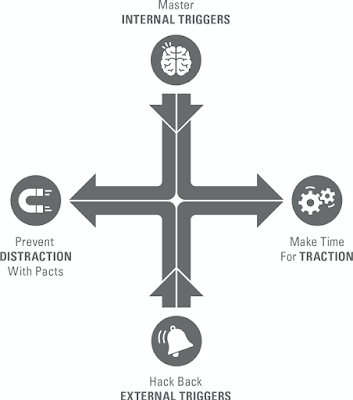
PART 1: MASTER INTERNAL TRIGGERS 

Chapter 3: Motivation is a desire to escape discomfort.
Find the root causes of distraction rather than proximate ones.

Chapter 4: Learn to deal with discomfort rather than attempting to escape it with distraction.

Chapter 5: Stop trying to actively suppress urges—this only makes them stronger.
Instead, observe and allow them to dissolve.

Chapter 6: Reimagine the internal trigger. Look for the negative emotion preceding the distraction, write it down, and pay attention to the negative sensation with curiosity rather than contempt.

Chapter 7: Reimagine the task. Turn it into play by paying “foolish, even absurd” attention to it. Deliberately look for novelty.

Chapter 8: Reimagine your temperament. Self-talk matters. Your willpower runs out only if you believe it does. Avoid labeling yourself as “easily distracted” or having an “addictive personality.” 

PART 2: MAKE TIME FOR TRACTION 

Chapter 9: Turn your values into time. Timebox your day by creating a schedule template.

Chapter 10: Schedule time for yourself. Plan the inputs and the outcome will follow.

Chapter 11: Schedule time for important relationships. Include household responsibilities as well as time for people you love. Put regular time on your schedule for friends.

Chapter 12: Sync your schedule with stakeholders.

PART 3: HACK BACK EXTERNAL TRIGGERS 

Chapter 13: Of each external trigger, ask: “Is this trigger serving me, or am I serving it?” Does it lead to traction or distraction? 

Chapter 14: Defend your focus. Signal when you do not want to be interrupted.

Chapter 15: To get fewer emails, send fewer emails. When you check email, tag each message with when it needs a reply and respond at a scheduled time.

Chapter 16: When it comes to group chat, get in and out at scheduled times. Only involve who is necessary and don’t use it to think out loud.

Chapter 17: Make it harder to call meetings. No agenda, no meeting. Meetings are for consensus building rather than problem solving. Leave devices outside the conference room except for one laptop.

Chapter 18: Use distracting apps on your desktop rather than your phone. Organize apps and manage notifications. Turn on “Do Not Disturb.” 

Chapter 19: Turn off desktop notifications. Remove potential distractions from your workspace.

Chapter 20: Save online articles in Pocket to read or listen to at a scheduled time. Use “multichannel multitasking.” 

Chapter 21: Use browser extensions that give you the benefits of social media without all the distractions. Links to other tools are at: NirAndFar.com/Indistractable.


PART 4: PREVENT DISTRACTION WITH PACTS 

Chapter 22: The antidote to impulsiveness is forethought. Plan ahead for when you’re likely to get distracted.

Chapter 23: Use effort pacts to make unwanted behaviors more difficult.

Chapter 24: Use a price pact to make getting distracted expensive.

Chapter 25: Use identity pacts as a precommitment to a self-image. Call yourself “indistractable.” 

PART 5: HOW TO MAKE YOUR WORKPLACE INDISTRACTABLE 

Chapter 26: An “always on” culture drives people crazy.

Chapter 27: Tech overuse at work is a symptom of dysfunctional company culture. The root cause is a culture lacking “psychological safety.” 

Chapter 28: To create a culture that values doing focused work, start small and find ways to facilitate an open dialogue among colleagues about the problem.

PART 6: HOW TO RAISE INDISTRACTABLE CHILDREN (AND WHY WE ALL NEED PSYCHOLOGICAL NUTRIENTS) 

Chapter 29: Find the root causes of why children get distracted. Teach them the four-part indistractable model.

Chapter 30: Make sure children’s psychological needs are met. All people need to feel a sense of autonomy, competence, and relatedness. If kids don’t get their needs met in the real world, they look to fulfill them online.

Chapter 31: Teach children to timebox their schedule. Let them make time for activities they enjoy, including time online.

Chapter 32: Work with your children to remove unhelpful external triggers. Make sure they know how to turn off distracting triggers, and don’t become a distracting external trigger yourself.

Chapter 33: Help your kids make pacts and make sure they know managing distraction is their responsibility. Teach them that distraction is a solvable problem and that becoming indistractable is a lifelong skill.

PART 7: HOW TO HAVE INDISTRACTABLE RELATIONSHIPS 

Chapter 34: When someone uses a device in a social setting, ask, “I see you’re on your phone. Is everything OK?” 

Chapter 35: Remove devices from your bedroom and have the internet automatically turn off at a specific time.